
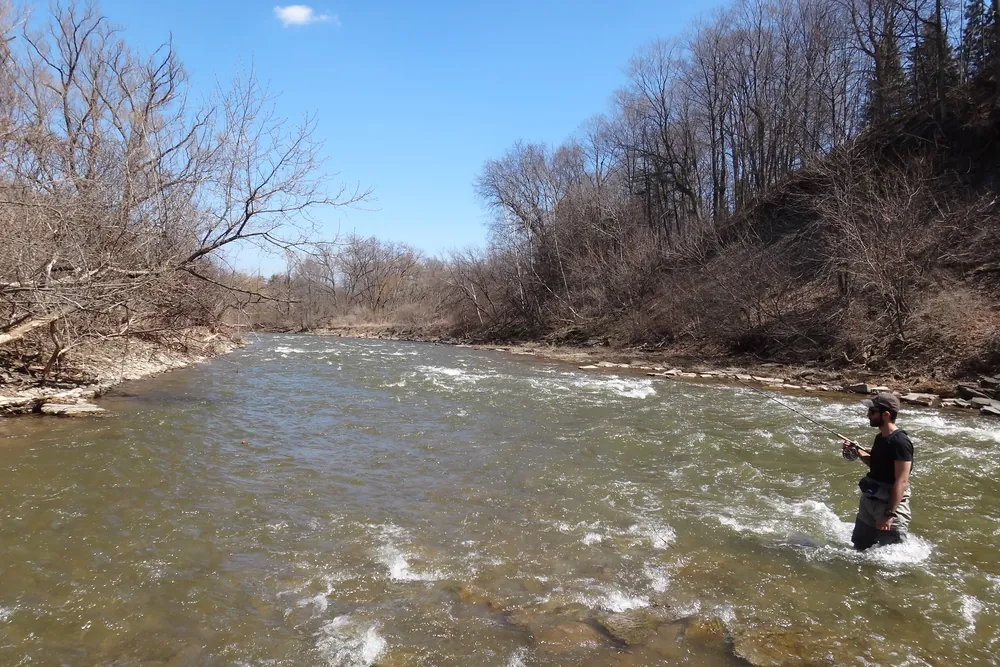
Ontario Centerpin Fishing Guide
Learn centerpin float fishing properly — casting, float control, shot patterns, depth and reading water — on the rivers it was made for.
How centerpin fishing works
A centerpin reel has a freely rotating spool that allows the current to pull line from the reel naturally as a float travels downstream. This allows an angler to create long, controlled, drag-free drifts through productive steelhead water.
That is the whole idea. A fixed-spool reel makes your line fight the current, which drags the float and moves your bait or fly unnaturally. A centerpin lets the river set the pace. Done properly you can follow a single drift forty or fifty feet down a run with the float never once being pulled off line.
It is the dominant steelhead method in Southern Ontario for good reason, and it is under-taught. Most guides here lead with a fly rod. This page exists because centerpin is what a lot of people actually want to learn.
What you will learn
A centerpin day is broken into the skills that actually decide whether you catch fish. Beginners work through them in order. Experienced float anglers pick the two or three that are costing them fish.
The cast
- Loading and releasing the spool
- Line management before and during the drift
- Casting without birdnesting the reel
- Placing a cast where the drift needs to start
The drift
- Float control and trotting
- Mending and keeping the float on line
- Float speed relative to the current
- Reading the float for what is happening below it
The rig
- Shot patterns and why they change
- Leader setup and length
- Adjusting depth to the run
- Bait and fly presentation under a float
The fish
- Reading steelhead water and holding spots
- Detecting subtle takes
- Hook sets that hold on a soft mouth
- Fighting, landing and releasing big steelhead
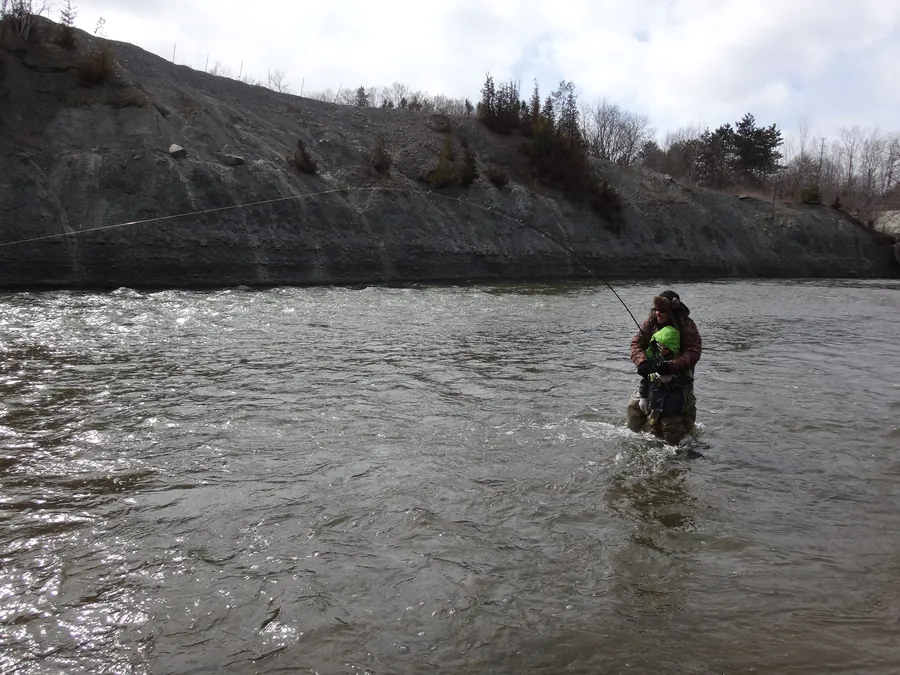
Complete beginners and experienced steelheaders
If you have never done it: you will spend the first part of the day on the cast, because nothing else works until that does. Then float depth, then reading the run. A lot of people catch their first steelhead on their first pin day.
If you already float fish: bring the problem. Drifts dragging? Missing takes? Losing fish at the net? Not sure why one run produces and the next does not? Those are afternoon-long conversations on the water, and they are the highest-value thing a guide can give an intermediate angler.
Private 3-hour lessons are the cheapest way to fix one specific thing.
Where we centerpin
Lower Credit River
Bigger water with room for long drifts and room to fight a fish. The best place to learn.
Bronte Creek
Tighter water where float control and approach matter more. A good step up.
We do not publish specific pools, runs or access points. That is deliberate — the water Sasha relies on stays fishable because it is not broadcast. You will learn it on the river.
Centerpin questions
What is a centerpin reel, exactly?
A centerpin (or 'pin') is a large-diameter reel with a freely rotating spool and no drag mechanism and no bail. Nothing resists the spool turning. That is the entire point: the current pulls line off the reel as your float moves downstream, so the float travels at the speed of the water instead of being dragged by your line.
Is centerpin hard to learn?
The cast takes practice — it is the part that frustrates people learning alone from videos, and the part that a few hours with a guide fixes fastest. Everything after the cast is easier to learn than fly fishing.
Do I need to buy a centerpin setup first?
No. Centerpin tackle is included on every trip. Trying it on a guided day before spending several hundred dollars on a reel is the sensible order to do this in.
Is centerpin only for steelhead?
It is most associated with steelhead, and that is where it shines. It also takes resident trout well in the right water. If you want to float fish for trout, say so when booking.
Centerpin or fly — which catches more steelhead?
In most Ontario tributary conditions, a well-presented float will out-fish a fly for numbers. Fly fishing for steelhead is its own reward rather than the efficient choice. Sasha teaches both and will tell you honestly which suits the day.
Learn centerpin fishing with Sasha
Book a full day to learn it properly, or a 3-hour lesson to fix one thing.